Sustainability is central to our business, guided by a double materiality assessment that prioritizes high-impact areas across operations and the supply chain. We build and strengthen sustainability practices together with our companies – supported by a central sustainability team working together with local coordinators across all markets.
Our value chain: from grape to glass
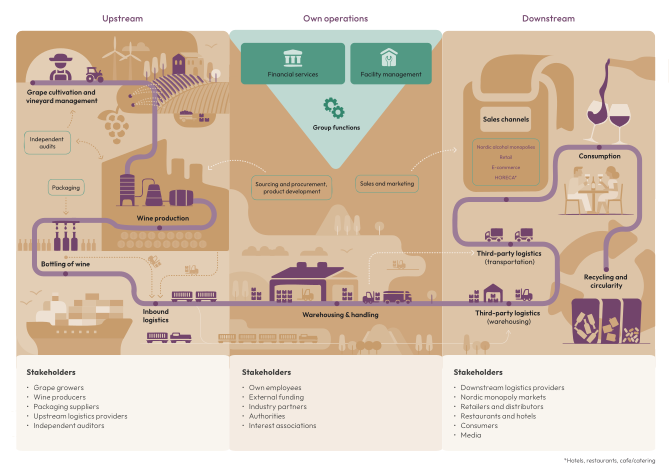
Our value chain in brief
Viva Wine Group’s value chain begins with grape cultivation in partner vineyards, where effective water management and healthy soils are essential for producing high-quality wine. This is followed by production processes such as fermentation, vinification, and bottling—either at origin or at facilities closer to the end market to enable more efficient transport.
After production, wines are stored in the Group’s own or third-party warehouses and distributed to local markets via rail, sea and road. Our product are then sold through B2B (Nordic monopoly markets, retail customers or restaurants), as well as B2C (e-com).
After consumption, our packaging formats such as glass bottles, bag-in-box, aluminium cans, and PET are managed through recycling systems that vary by market.
Collaboration and dialogue across the value chain are central to Viva Wine Group’s approach. Together with companies and producers worldwide, the Group drives sustainable development in wine cultivation, production, packaging, and transportation, supported by coordinated sustainability management and shared ways of working.
Group focus impact areas
Emissions across the value chain, together with operational emissions, contribute to climate change. At the same time, shifting weather patterns increase pressure on traditional viticulture and wine production.
Viticulture and production depend on water availability. Prolonged drought affects irrigation capacity, yields, and production conditions.
Viticulture impacts wildlife, plant life, and soil health, all essential to ecosystem stability and the long-term sustainability of wine production.
Focus is on reducing material use and improving circularity across the value chain through more efficient resource use and packaging.
Fair working conditions, equal treatment, and a safe work environment are key to strengthening employee well-being and engagement.
Workers in the supply chain may face poor conditions, inadequate rights, and human rights abuses, requiring due diligence and follow-up.
Overconsumption of alcohol may pose health risks to individuals and wider society, highlighting the importance of responsible marketing and clear, transparent communication.
Operations are guided by strong ethical principles, including the prevention of corruption and bribery, as well as the protection of whistleblowers across operations and the supply chain.
Latest sustainability report
Read more about our sustainability work in our latest ESRS-inspired sustainability report.